- Home
- About
- Services
- Total Knee Replacement
- Total Hip Replacement
- Reverse Shoulder Replacement
- Robotic Shoulder Replacement
- Arthroscopic ACL Reconstruction
- Arthroscopic Meniscus Repair
- Arthroscopic Rotator Cuff Repair
- Arthroscopic Biological Cartilage Regeneration for Joint Preservation
- Robotic Total Knee Replacement
- Robotic Total Hip Replacement
- FAQ
- Our Gallery
- Home
- About
- Services
- Total Knee Replacement
- Total Hip Replacement
- Reverse Shoulder Replacement
- Robotic Shoulder Replacement
- Arthroscopic ACL Reconstruction
- Arthroscopic Meniscus Repair
- Arthroscopic Rotator Cuff Repair
- Arthroscopic Biological Cartilage Regeneration for Joint Preservation
- Robotic Total Knee Replacement
- Robotic Total Hip Replacement
- FAQ
- Our Gallery
What Is Robotic Total Knee Replacement?
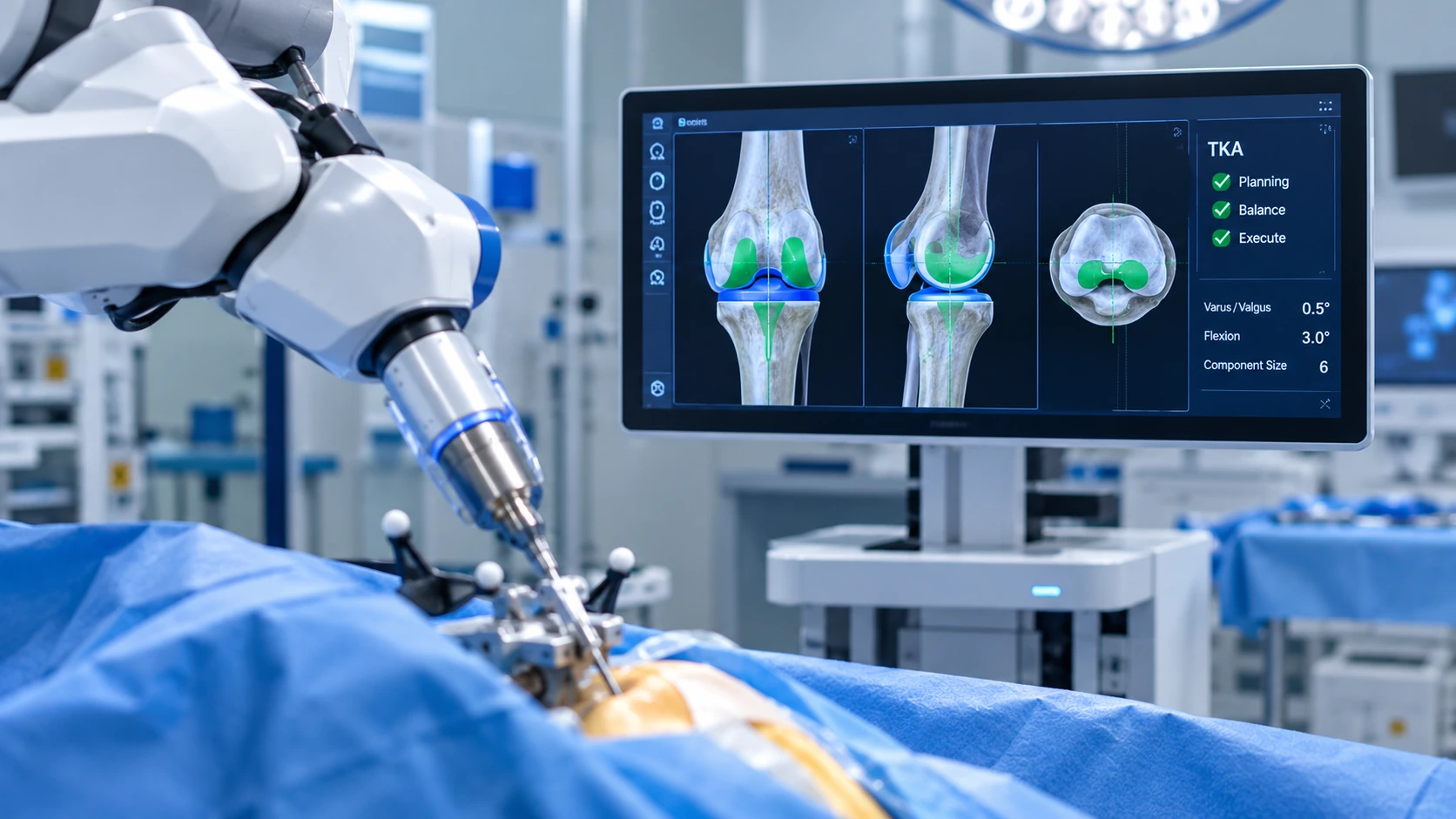
Robotic Total Knee Replacement (RTKR) is an advanced surgical procedure designed to replace a damaged or worn-out knee joint caused by arthritis, injury, or age-related degeneration. Unlike conventional knee replacement surgery, robotic-assisted technology enables Dr. Nashit S. Ansari to create a personalised surgical plan based on each patient's unique anatomy - so the joint is rebuilt around your knee, not around an average one.
The robotic system provides real-time guidance throughout the procedure, helping the surgeon achieve highly accurate implant placement while preserving healthy bone and surrounding soft tissues. Importantly, the surgery is always performed by the orthopaedic surgeon – the robotic technology serves as an advanced precision tool, not a replacement for surgical judgement.
Benefits of Robotic Total Knee Replacement
Robotic assistance changes what is achievable in knee replacement surgery - in accuracy during the procedure, and in how comfortably you recover afterwards. Patients treated with this approach benefit from:
- Higher surgical precision
- Personalised treatment planning
- Less damage to healthy tissues
- Reduced post-operative pain
- Faster rehabilitation
Few Of The Common Concerns
Knee pain rarely arrives all at once - it builds until stairs, long walks and even a night's sleep become difficult. Patients most often come to us with persistent knee pain, swelling around the joint, stiffness, reduced range of motion, instability, or a clicking and grinding sensation while moving. Many have been managing the problem for years with painkillers and injections. Robotic total knee replacement is considered when the joint damage is advanced enough that these measures no longer restore comfortable movement.
The orthopaedic surgeon performs the entire surgery. The robotic system does not operate independently - it provides real-time guidance that helps the surgeon place the implant with exceptional accuracy and preserve healthy tissue. Every decision during the procedure remains with Dr. Ansari.
In conventional surgery, implant positioning depends largely on manual measurement and surgical experience. In robotic knee replacement, a three-dimensional model of your knee is built before surgery to determine implant size, positioning, bone preparation, joint alignment and soft tissue balancing. This personalised plan means greater accuracy, better alignment and less disturbance to healthy bone and soft tissue.
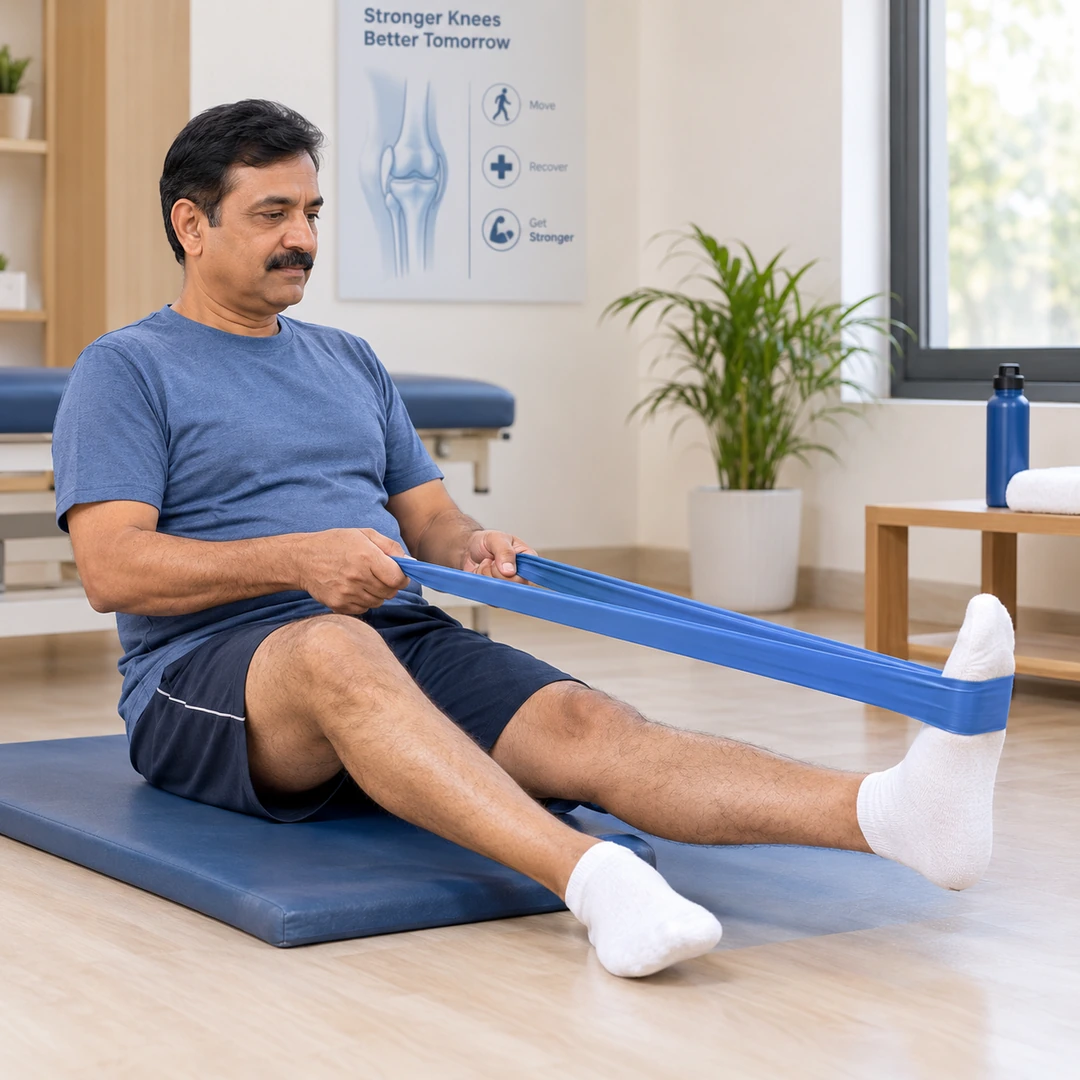
Most patients begin walking with assistance within 24 to 48 hours, depending on their individual recovery. Early mobilisation is an important part of the process and is supported by pain management, physiotherapy, walking exercises and muscle strengthening, with regular follow-up visits throughout.
It is commonly recommended for patients with osteoarthritis, rheumatoid arthritis, post-traumatic arthritis, severe cartilage damage, knee joint degeneration, bone-on-bone arthritis, advanced wear and tear, and in selected cases a failed previous knee replacement. Suitability is confirmed only after consultation, clinical examination and imaging - not from a scan report alone.
Digital X-rays are standard. An MRI scan may be advised if required, a CT scan is used for robotic surgical planning, and blood tests are carried out before surgery. Investigations are recommended only where they genuinely inform the treatment plan.
Recovery is structured around early mobilisation, pain management, physiotherapy, walking exercises and muscle strengthening, supported by regular follow-up visits. Your rehabilitation plan is set according to your own progress rather than a fixed timetable.
Get in touch with us
Availability
24 x 7
Our Services
Physiotherapy Services
How to start a physiotherapy for beginners?