- Home
- About
- Services
- Total Knee Replacement
- Total Hip Replacement
- Reverse Shoulder Replacement
- Robotic Shoulder Replacement
- Arthroscopic ACL Reconstruction
- Arthroscopic Meniscus Repair
- Arthroscopic Rotator Cuff Repair
- Arthroscopic Biological Cartilage Regeneration for Joint Preservation
- Robotic Total Knee Replacement
- Robotic Total Hip Replacement
- FAQ
- Our Gallery
- Home
- About
- Services
- Total Knee Replacement
- Total Hip Replacement
- Reverse Shoulder Replacement
- Robotic Shoulder Replacement
- Arthroscopic ACL Reconstruction
- Arthroscopic Meniscus Repair
- Arthroscopic Rotator Cuff Repair
- Arthroscopic Biological Cartilage Regeneration for Joint Preservation
- Robotic Total Knee Replacement
- Robotic Total Hip Replacement
- FAQ
- Our Gallery

What Is Arthroscopic ACL Reconstruction?
Arthroscopic ACL Reconstruction is a minimally invasive orthopaedic procedure performed to repair a torn Anterior Cruciate Ligament (ACL) - one of the key ligaments that stabilises the knee joint. ACL injuries are common among athletes and physically active individuals, but can also occur during everyday activities involving sudden twisting, pivoting or trauma to the knee.
Instead of repairing the damaged ligament, the torn ACL is typically reconstructed using a graft, taken either from the patient’s own tissue or from a donor. The surgery is performed using an arthroscope – a small camera inserted through tiny incisions – allowing Dr. Nashit S. Ansari to visualise the inside of the knee with high precision while minimising damage to surrounding tissues.
The goal of ACL reconstruction is to restore knee stability, reduce pain, improve function, and help patients safely return to sports and daily activities after appropriate rehabilitation.

Benefits of Arthroscopic ACL Reconstruction
A torn ACL does not heal on its own, and a knee that keeps giving way damages itself further every time it does. Reconstructing the ligament arthroscopically offers:
- Minimally invasive procedure with small incisions
- Restores knee stability
- Reduces episodes of the knee giving way
- Enables return to sports and active lifestyles with appropriate rehabilitation
- Long-term protection against further knee instability
Few Of The Common Concerns
Most people remember the exact moment. A pop at the time of injury, sudden severe knee pain and rapid swelling are the classic signs of an ACL tear. What follows is often more troubling than the injury itself - instability or buckling, difficulty walking, a limited range of motion, pain while twisting or pivoting, and a persistent feeling that the knee might give way at any moment. Many patients stop playing their sport entirely, and some begin avoiding stairs and uneven ground in daily life. Each episode of the knee giving way risks further damage to the cartilage and meniscus, which is why an ACL tear is worth assessing properly rather than managing around.
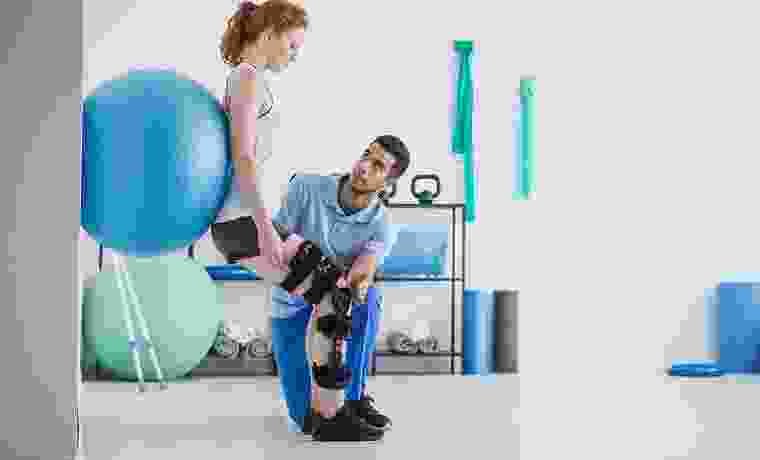
There is no fixed date. Recovery timelines vary, and return to sport is determined by the surgeon based on healing, strength and functional recovery rather than time alone. Rehabilitation progresses through pain and swelling management, early knee movement, progressive physiotherapy, muscle strengthening, balance and coordination training, functional rehabilitation, and sport-specific training when appropriate. Returning before the knee is genuinely ready is the main cause of re-injury.
A torn ACL generally cannot be stitched back together reliably. Instead, the torn ligament is removed and a new one is built in its place. Bone tunnels are created in the femur and tibia, a tendon graft is positioned to reconstruct the ACL, and the graft is secured using specialised fixation devices. Knee stability is checked before the procedure is completed.
Both options exist - the graft may be taken from your own tissue or from a donor. Graft selection is one of the specific decisions made during surgical planning, alongside identifying the type of ACL tear, any associated ligament or cartilage injuries, the surgical technique, the rehabilitation plan and your return-to-sport goals. Dr. Ansari will discuss which option suits your case at consultation.
Diagnosis begins with a comprehensive knee examination including ligament stability tests, range of motion assessment, swelling evaluation, meniscus examination, walking pattern analysis and functional knee assessment. Common clinical tests include the Lachman Test, Anterior Drawer Test and Pivot Shift Test. An MRI scan is the gold standard for confirming ACL injuries, supported by digital X-rays, a CT scan in selected cases and blood investigations before surgery.
Athletes participating in football, cricket, basketball, volleyball, skiing or badminton are at higher risk. The injury mechanism usually involves sudden twisting or pivoting movements, landing incorrectly after a jump, or direct impact to the knee. A previous ACL injury, weak lower limb muscles, poor neuromuscular control and high-impact sports activity all increase risk further.
Yes. Revision surgery for a failed previous ACL reconstruction is one of the situations where the procedure is recommended, alongside a complete ACL tear, knee instability after ACL injury, sports-related knee injuries, ligament injuries associated with meniscus tears, multi-ligament knee injuries and recurrent episodes of the knee giving way.
Get in touch with us
Availability
24 x 7
Our Services
Physiotherapy Services
How to start a physiotherapy for beginners?